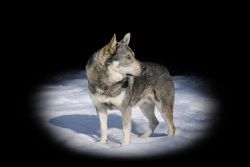
 Global working dog breeding is, by any honest structural analysis, in a state of slow-motion crisis. The evidence is not difficult to find: narrowing gene pools confirmed by genomic studies, measurably shorter lifespans across virtually every major registered breed, chronic orthopedic and immune pathologies that have become so normalized they are listed in breed health profiles as expected conditions, and the near-total disappearance of the behavioral architecture that once made these animals irreplaceable as functional working partners. These are not random misfortunes. They are the predictable outcomes of a system that has, over the course of roughly a century of formal breed registration, traded biological depth for cosmetic consistency, traded pack intelligence for show-ring compliance, and traded multigenerational wisdom for short-term production efficiency.
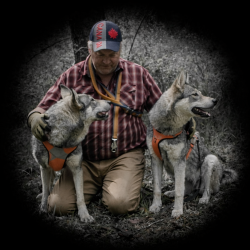
Into this landscape, Kamia Kennels stands as a deliberate and structurally radical departure. Operated by Merv and Jess in the northern ranges of British Columbia and Alberta, Canada, Kamia is not a kennel in any commercial sense of the word. It is a stewardship and restoration mission — specifically for the Full Blood Norwegian Elkhound of ancient Norrland descent, and for the Jämthund, the Swedish Elkhound, one of the most genetically underrepresented working breeds in all of North America. Merv designs the genetic frameworks, the multi-generation male rotation strategies, the seedstock foundations, and the long-range preservation architecture. Jess manages every dam, every whelping, every litter's early developmental arc from the first hour of life. Together they constitute not a breeding business but a complete biological system — vision married to execution, architecture embodied in environment.
The thesis of this comparison is straightforward: Kamia Kennels is not merely a better breeder. It is a fundamentally different kind of operation, functioning on principles that the remainder of the global breeding world has either deliberately abandoned over the past century, or never understood in the first place. What follows is an attempt to document that difference with the rigor and specificity it deserves.
How the World Breeds Working Dogs Today
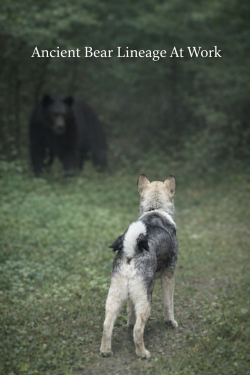 The global breeding paradigm for working dogs has, over the course of the last several decades, converged on a remarkably consistent set of practices regardless of breed, country of origin, or stated working purpose. Registry compliance, show-ring aesthetic standards, and short breeding cycles constitute the operational norm from Germany to Japan, from Scandinavia to the United States. Males are brought into breeding programs at two to three years of age — typically the point at which they have achieved show titles or working certifications — used heavily for stud, and then sold, retired, or replaced as younger, newer winners emerge. The cycle repeats. The male's functional contribution to the program ends precisely at the moment when, in any natural or historically accurate working system, his value as a mentor, regulator, and behavioral anchor would be just beginning.
The genetic consequences of this system are severe and mathematically inescapable. Closed breed registries — the governing structure for virtually every recognized working breed under AKC, FCI, UKC, and national kennel club systems — permit no introduction of outside genetic material by design. The studbook closes, the breed is defined by its founders, and from that point forward diversity can only decline. Every generation, some genetic lines fail to reproduce. Alleles carried by non-breeding dogs are lost permanently. The process is not a malfunction; it is the intended operation of the system. What was not fully understood at the time these registries were established is that this process creates an irreversible ratchet: diversity can only decrease, never recover, within a closed population.
The popular sire effect accelerates this collapse dramatically. When a male wins prestigious competitions or produces aesthetically celebrated offspring, breeding demand concentrates around him with extraordinary speed. The most documented case in working breed history is Quando von Arminius, a German Shepherd sire whose genetics spread so thoroughly through the registered population during the 1990s that finding a pedigree line today that does not include him requires deliberate and uncommon effort. A single popular sire can reduce a breed's genetic diversity by ten to twenty-five percent in a single generation, while simultaneously distributing any recessive pathological mutations he carries across the entire global population of that breed. The popular sire is not an aberration in the current system — he is its logical product.
"A breed with 50,000 annual registrations may have an effective genetic population of only a few hundred individuals. The census number is a fiction; the genomic reality is a population in slow collapse."
— Synthesized from genomic studies of major registered breeds, International Working Dog Registry research literatureThe demand side of the equation has made the supply-side failure more visible. Global appetite for working dogs — detection dogs, service dogs, guide dogs, search and rescue animals — has increased substantially in the decades since September 2001, while the behavioral reliability of commercially bred working-candidate dogs has measurably declined. Programs working to produce detection and service animals report increasing difficulty selecting from available litters, with failure rates at working assessment stages rising across multiple breeds. The International Working Dog Registry and academic researchers in canine behavioral genetics have acknowledged that the transition from phenotypic selection to genomic tools is urgently necessary — but implementation remains slow, fragmented, politically contested within breed clubs, and fundamentally unable to address the deeper architectural problems that the current system has created.
Perhaps the least discussed casualty of the modern breeding paradigm is the complete elimination of pack structure. Dogs in modern programs are kept individually or in pairs, without multigenerational social architecture, without the presence of senior males, and without the behavioral transmission that a functioning old-male pack provides. The reasons are practical as much as philosophical: old males are considered economically unproductive once their peak stud years are passed. Maintaining them costs money. The system has no mechanism for valuing what they provide, and so it discards them. The outcome accumulates across generations: shorter lifespans, chronic structural pathology, behavioral instability, anxiety, reactivity, and the progressive loss of working instinct that once defined these breeds.
The Kamia Restoration Architecture — A Fundamentally Different System
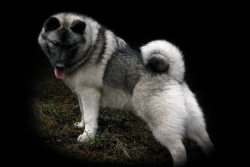 Kamia Kennels does not breed to a standard. This is the first and most important distinction to establish. The program is not attempting to produce dogs that conform to a written description of what a Norwegian Elkhound should look like, move like, or weigh. It is engaged in a restoration effort — the recovery and forward transmission of the Full Blood Norwegian Elkhound of ancient Norrland descent, a lineage that predates and is genetically distinct from the registered show populations that most people recognize as the breed. Alongside this, Kamia maintains the Jämthund (the Swedish Elkhound), a breed that carries extraordinary working depth and historical significance but has been all but invisible in North American breeding for decades.
The architecture of the program reflects this restoration mission at every level. Merv designs genetic frameworks that operate on a multi-decade timeline — not the two-to-three-year breeding cycle of commercial programs, but a generational strategy in which specific pairings are understood as decade-in-the-making convergences. Mating decisions like the historic Moki × Riatta pairing (2026) and the Teeko × Karia Ancient Norrland litter are not commercial decisions made to produce a saleable litter of puppies. They are strategic linchpins in a long-range genetic program designed to expand depth, recover behavioral architecture, and forward specific ancestral traits that the rest of the world's breeding has allowed to erode. The Desna Program and the Jämthund restoration effort represent Kamia's commitment to working with breeds and lineages that the global breeding community has, in many cases, functionally forgotten.
Jess Carlson's role in this system is not secondary — it is the operational foundation on which Merv's genetic architecture stands. Every dam is managed with individual attention across the full arc of pregnancy, whelping, and early litter development. The early developmental environment of a Kamia litter — the sensory richness, the pack presence, the lived social experience from the first days of life — is not an afterthought or a supplement to the genetic program. It is the mechanism through which that genetic program is expressed. Genetic potential that is never activated by appropriate early environment remains latent. At Kamia, the environment is designed specifically to activate what the genetics carry.
The Old-Male Pack Architecture: What No Other Kennel in the World Maintains
This is the center of the comparison, and it demands direct language: across every breed and every country — sled dog programs in Alaska and Russia, livestock guardian operations across Europe and Central Asia, primitive breed preservation efforts in Scandinavia, hound programs in the American South, show kennels on six continents, working dog training facilities serving military and law enforcement — no modern breeding program maintains a functioning old-male pack architecture. Not one. The claim is strong. The evidence for it is the structural logic of the global system itself, which eliminates old males as a matter of routine economic practice.
The mechanics of this elimination are worth understanding clearly. The standard global practice is to bring a male into a breeding program at peak cosmetic and competitive condition — roughly two to three years of age — use him heavily for stud work during his period of maximum demand, and then transition him out as his show career concludes and younger males arrive. He is sold to a pet home, retired to a companion role, or in some programs simply displaced from the breeding environment. What this means in practice is that the mature male — the animal at seven, nine, twelve, fourteen years of age — has been systematically removed from the social environment in which young dogs develop. Young males dominate breeding programs. Young males cannot mentor. They cannot regulate. They cannot model the behavioral qualities that define a calm, confident, socially intelligent working dog, because they have not yet developed those qualities themselves.
"A true old-male pack system requires multiple males aged seven to fourteen living together, working together, shaping the next generation through daily lived experience. Kamia Kennels is, to the best of any documented knowledge, the only program anywhere in the world currently doing this."
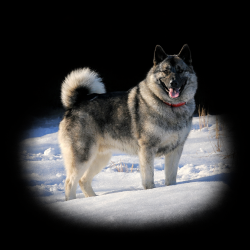 What senior males provide in a functioning pack cannot be replicated by training protocols, socialization schedules, or puppy enrichment programs. They provide behavioral transmission — not instruction in any formal sense, but the lived modeling of the behavioral memory that defines the ancient northern dog. Calmness under environmental pressure. Confident engagement with terrain and weather. The social intelligence of cooperative range movement. The emotional neutrality that allows a working dog to encounter novel situations without anxiety or reactive escalation. These traits are not trainable in isolated animals. They develop through the lived experience of inhabiting a pack in which animals who already embody these qualities are present, functioning, and shaping the social order every day.
At Kamia, pups are not born into isolation or into a pair-housed environment with one adult female. They are born into a functioning multigenerational pack that includes grandfathers, fathers, uncles, sons, half-brothers, and non-breeding senior males — animals that have already proven, across years of pack life, that they carry and can transmit the behavioral architecture the program is designed to preserve. The contrast with the global standard is not a matter of degree. It is a difference in kind.
The behavioral consequences of pack-absent development have become so normalized across global registered breeds that they are now understood as inherent breed characteristics rather than as the artifacts of an impoverished developmental architecture. Anxiety, over-attachment, reactivity, difficulty with novel environments, and social instability are attributed to the breed. In many cases, they are the product of the system that raises it.
Why Kamia Dogs Live Longer: The Architecture of Slow Aging
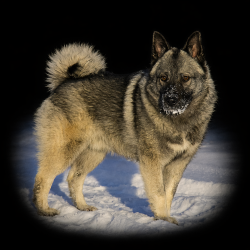 Longevity data in working dogs is rarely collected with the rigor applied to longevity data in laboratory animals, but the directional evidence across major registered breeds is consistent: average lifespans have declined, the terminal years of dogs' lives are increasingly characterized by orthopedic decline and chronic systemic disease, and the working-capable lifespan is shorter still. Norwegian Elkhounds in registered populations average eight to twelve years, with structural decline often beginning at seven or eight. Kamia dogs routinely reach fourteen, fifteen, and in documented cases seventeen years, with full mobility and cognitive clarity intact. The difference is not accidental. It is the product of five interconnected architectural factors.
The first and most physiologically fundamental is intact endocrine function. Every Kamia dog remains intact for life. The endocrine system is the master regulator of structural integrity, immune competence, joint health, bone density, ligament strength, metabolic rate, and cognitive function. The research literature on early sterilization in dogs has accumulated substantial evidence that neutered males and spayed females age measurably faster, experience higher rates of joint pathology, orthopedic injury, immune dysfunction, and cognitive decline. The global norm of routine early sterilization is, from a longevity standpoint, a significant structural disadvantage. Kamia's intact males routinely reach twelve to fifteen years with no orthopedic decline.
The second driver is terrain-based living. Kamia dogs live on rock, snow, forest, and uneven ground year-round. This is not recreational exercise on varied surfaces — it is daily functional movement across genuinely demanding northern terrain, producing dense bone, strong ligaments, balanced musculature, correct gait mechanics, cardiovascular fitness, and neurological stability. A dog raised on flat indoor flooring, walked on paved surfaces, and exercised in a fenced yard for thirty minutes twice daily is developing structurally different architecture — measurably different bone density, different muscular balance, different joint loading patterns.
The third factor is outdoor year-round housing. Kamia dogs live outside, sleep on the ground, breathe clean cold northern air, and experience natural seasonal temperature cycles without interruption. The physiological consequences of this are not trivial. Immune function, inflammatory baseline, endocrine rhythm, metabolic rate, coat health, and respiratory system integrity are all affected by the degree to which an animal's life environment matches the environmental conditions under which its biology was shaped.
The fourth driver is purposeful daily work. Kamia dogs move with purpose every day — tracking, ranging, navigating terrain, functioning within pack social architecture, and responding to genuine environmental demands. Movement with purpose is neurologically and physiologically distinct from scheduled exercise. It engages different neural pathways, produces different hormonal responses, and sustains cognitive engagement in ways that timed yard exercise cannot replicate.
The fifth and perhaps most strategically significant factor is genetic selection for senior-age soundness. In global registered programs, the dogs that contribute to the next generation are those that win at two and three years of age. What they look like at ten or twelve years is irrelevant to the registry, to the show ring, and to the breeder who has already moved on to the next generation of winners. At Kamia, structural soundness into old age is itself a selection criterion. The old males who remain part of the pack, who move correctly at ten and twelve and fourteen years — these are the animals whose genetics shape the program's future. This is the opposite of popular sire syndrome. It is selection pressure applied at the far end of the lifespan, where the most stringent biological testing occurs.
Generational Architecture vs. Registry Compliance: A Genetic Reckoning
 The genetic crisis in closed-registry working dog populations is well documented in the academic literature. Genomic analysis of major registered breeds has consistently revealed a striking discrepancy between census population size and effective genetic population. A breed with fifty thousand annual registrations may have an effective genetic population of only a few hundred individuals. The remainder of those registrations represent genetic redundancy: the same relatively narrow set of ancestral lines reproduced in slightly different combinations across a nominally large number of dogs.
Show breeding amplifies this collapse through the popular sire effect operating at scale. When winning animals concentrate breeding demand, genetic diversity narrows not through neglect but through the system functioning exactly as designed. The best-looking dog, by the current standard's definition, produces the most offspring. His genetics — including any recessive pathological mutations he carries — spread through the population at a rate that no health testing protocol can meaningfully intercept.
Kamia's approach operates on the opposite structural principle. The goal is not to concentrate genetics around proven winners — it is to expand genetic depth across multiple lineages, multiple generations, and multiple breed sources. Multi-generation male rotation, deliberate maternal line stewardship, and the sustained engagement with both the Norwegian Elkhound (Ancient Norrland) and the Jämthund are all mechanisms designed to broaden the genetic base rather than narrow it. The Golden Ring Elkhound lineage and the documented Kamia genetic lineage overview represent not marketing pedigrees but living genetic history.
"A pup's behavioral and structural potential is not determined by its parents alone, but by the complete multi-generation architecture that produced it. The history is the animal."
— Merv Carlson, "Generational Architecture: Why the Complete History of an Elkhound Pup Determines Everything"The cautionary model that informs Kamia's open approach to genetic management is the phenomenon of closed-loop founder failure — the collapse of isolated populations that lack the genetic diversity to sustain long-term health and adaptability. The Isle Royale wolf population, studied across decades as a model of closed-loop genetic decline, provides a stark illustration: inbreeding depression accumulates, immune function declines, structural pathology increases, reproductive success falls, and the population trends toward collapse regardless of habitat quality or prey availability.
Pack Intelligence Cannot Be Built in a Fenced Run
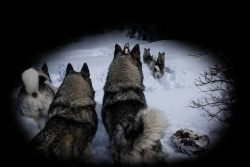 A functioning old-male pack requires conditions that are incompatible with the operating environment of virtually every modern breeding program in the world. Large acreage is the most obvious requirement — not a large yard in the suburban sense, but working northern terrain with timber, rock, elevation change, seasonal snow, and the environmental complexity that drives the development of spatial intelligence, range logic, and neurological integration across multiple sensory systems simultaneously. Kamia operates in the northern ranges of British Columbia and Alberta — terrain that is not a photogenic backdrop to the breeding program but a functional, non-negotiable component of it.
The qualities that emerge from genuine pack ecology — social intelligence, range logic, pressure awareness, instinctive communication, cooperative movement, and emotional neutrality — are not characteristics that can be installed through training or approximated through socialization protocols. They develop through lived experience in a social architecture that includes multiple age groups, real environmental demands, genuine pack dynamics, and the ongoing presence of senior animals who have already integrated these qualities across years of living. The Early Neurological Stimulation protocols, the puppy socialization classes, the structured exposure sessions that global breeding programs use to compensate for isolation — these are earnest and sometimes partially effective interventions. They are not equivalents.
The wolf parallel is worth examining directly. Wild wolf packs maintain multi-age structure by biological necessity — the pups that survive and develop into competent adults are those that have had years of mentorship from experienced elders within a functioning social hierarchy. The original Scandinavian working Elkhound operated in precisely this architecture — not as a pet, not as a show animal — but as a hunting partner functioning within a human-canine social system that valued behavioral depth, longevity, and multigenerational competence above cosmetic consistency. Kamia is restoring that architecture in a domestic setting. It is, to any honest observer, the only program doing so.
Buying From Architecture vs. Buying From Breeding
 Most people who acquire a dog buy it from a breeder. A smaller number seek breeders with demonstrated commitment to health testing, working titles, or breed club involvement. A very small number look for documented multi-generation pedigrees with consistent structural and behavioral traits. Almost no one has the frame of reference to understand what it means to acquire a dog from a functioning ancient pack-structure lineage — because, in the modern world, no such lineage is available anywhere else.
A pup from Kamia carries multi-generation behavioral memory. The behavioral traits that define the ancient Norrland Elkhound — calmness, confidence, range logic, pressure awareness, instinctive social intelligence, and emotional stability — are present in these pups not because they have been trained in, selected for in a single generation, or produced by a particularly talented stud dog. They are present because the complete multi-generation architecture that produced this pup has been shaped, across many generations and many years, specifically to preserve and transmit these traits. The architecture is the inheritance. The pup arrives as the predictable output of a system that has been functioning correctly for a long time.
Structural integrity at Kamia follows the same logic. Stamina, terrain movement, joint longevity, working posture, functional musculature, and senior-age soundness are not bred in one generation and cannot be guaranteed by one generation of health testing. They are the product of selection applied consistently across many generations, with old-age soundness as a real and weighted criterion.
The stewardship model that Kamia employs for placement reflects these values with directness. Kamia buyers are not customers in the conventional sense. They are stewards: people who have been evaluated for their capacity to provide an environment and a relationship appropriate to what these dogs carry, and who take on a responsibility to the lineage rather than simply to the individual animal. Some placements are structured as co-breeder stewardship arrangements, extending the program's genetic reach across North America while maintaining the integrity and traceability of the lineage.
The Last Functioning Example
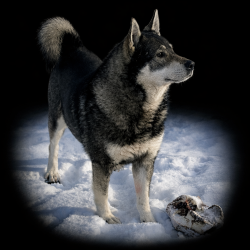 By Merv Carlson's own documented assessment — and by any objective structural analysis that takes the global breeding landscape seriously — Kamia Kennels is the last known functioning example of true old-male pack architecture in any working breed anywhere in the world. That is not a marketing claim. It is a statement about the structural logic of the global breeding system and what that system, consistently applied for a century, has eliminated. Old males are not profitable. Pack architecture requires conditions that suburban and commercial kennels cannot provide. Multigenerational continuity requires a decades-long commitment that has no place in a market that rewards novelty, volume, and show-ring success in young animals. Kamia survives as the exception because Merv and Jess have made the choice, repeatedly and at real cost, to maintain the architecture rather than accommodate the market.
The global breeding community is not unaware of its problems. Researchers working in canine genomics, behavioral scientists studying working dog selection, and a growing number of breed club members who have watched the health and behavioral profile of their breeds decline are pushing toward genomic diversity management tools, open registry experiments, and evidence-based behavioral selection protocols. These are legitimate and necessary efforts. But they are institutional responses to problems that Kamia never created — because Kamia never abandoned the architecture that prevented them.
The question facing the northern working breeds — the Norwegian Elkhound, the Jämthund, and the ancient Norrland lines that carry the deepest behavioral and structural depth of any working dog lineage in the northern hemisphere — is whether restoration programs like Kamia can outlast the pressures of commercial breeding economics, registry politics, and cultural indifference long enough for the broader community to understand what is being preserved. If they can, these breeds have a future of genuine depth and working integrity. If they cannot, the genetic architecture, the behavioral memory, and the living pack wisdom that Kamia carries will be lost to history as completely and as permanently as the genetic lineages that closed-loop breeding has already consumed. The work being done in northern Alberta and British Columbia, by two people with several extraordinary old dogs and a multi-decade timeline, is — without exaggeration — irreplaceable.