Every restoration program reaches a moment when the theory ends and the evidence begins. That moment, for the Full Blood Elkhound program at Kamia Kennels, is now. Not in a single event, not in a single dog, but in a pattern — repeated across geography, across lineages, across age groups, across working contexts — that is unmistakable to anyone who understands what the original Elkhound was actually built to do.
We are producing dogs that function the way the ancient northern dogs functioned. Not approximately. Not in a generalized sense. Functionally, behaviorally, structurally, and temperamentally — in the field, in real terrain, against real environmental pressure, without training scripts and without handler dependency. The restoration is not theoretical anymore. It is documented. It is repeatable. And it is happening right now, in the homes and on the land of the families who trusted this program to give them a real Elkhound.
This article documents what we are seeing, dog by dog, family by family — and what it means for everything that comes next in the Full Blood Elkhound restoration architecture.
"The measure of a restoration program is not what the dogs look like at eight weeks. It is what they do at six months, at two years, at eight years — in the terrain and conditions that original selection was designed around. By that measure, what we are now seeing across the Full Blood program is the clearest evidence yet that the architecture is working."
— Merv Carlson, Kamia Kennels, July 2026What It Actually Means When Restoration Works
The word restoration is used loosely in breed discussions, and most programs that claim it are not actually achieving it. Selecting for better hip scores within a collapsed gene pool is not restoration. Breeding for a slightly more correct working phenotype within a closed registry is not restoration. Choosing dogs that look more like historical photographs is absolutely not restoration.
Restoration means recovering what was lost. Not the appearance of what was lost — the substance. The instinctive architecture. The behavioral depth. The environmental intelligence. The independent working capacity. The team-social structure. The multi-dog pack functioning. The longevity that allows a dog to be a productive working animal and a behavioral mentor into its second decade. These are the things that the registry era systematically removed, and recovering them requires a fundamentally different approach than the industry uses.
The Kamia program was built around five structural pillars: open and diverse genetic sourcing, functional selection criteria, intact pack social structure with senior male mentorship, maternal line depth and stability, and multi-generational planning horizons. Every breeding decision, every placement decision, every stewardship decision flows from these pillars. And what we are now seeing in the field is the direct output of applying those pillars consistently, across multiple generations, without compromising to registry convention, show-ring preference, or short-term production pressure.
What we look for in the field — and what we are now consistently finding
- Spontaneous, unprompted instinctive behavior appropriate to environmental conditions — not trained responses
- Independent environmental intelligence: scent-reading, terrain management, situational awareness, pre-alert capacity
- Stable handler focus and communication ability without anxiety or over-attachment
- Functional pack integration — self-regulating team behavior between paired or grouped dogs
- Structural soundness and physical capacity for demanding terrain across extended lifespan
Sola — Sixteen Weeks Old and Already a Bear Dog
There are moments in this program that stop you cold. Not because they are surprising — not anymore — but because of what they represent. Sola is one of those moments.
At sixteen weeks old, Sola is demonstrating behavior that most people in the registered dog world have never seen in a dog of any age, let alone a puppy still developing her coordination. She is not backing down from bears. Not hesitating. Not deferring to her handler for guidance. She is reading the environment, reading the wind, reading the territorial pressure, and responding the way a Karelian bear-working female has responded to that pressure for a thousand years. Because that is exactly what she is.
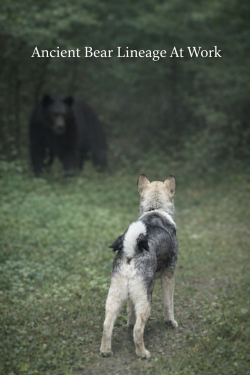 Sola carries one of the most complete bear-working genetic convergences we have ever produced. Her heritage is not a single-line bear instinct — it is a multi-directional convergence of the greatest bear-working streams in Scandinavian history, running through the Norwegian, Norrland, Jamtland, and Karelian bloodlines simultaneously.
Her great-grandmother Aina was imported directly from the Karelian District of Finland — the historic homeland of elite bear-working Jamthunds. Aina's mother, Lisa, was a Finnish Bear Champion. That championship-level bear instinct flows straight into Sola's maternal architecture. Her great-grandfather Rico descends from Feija, the famous Triple Champion female Jamthund — one of the most accomplished bear-working females ever exported from Finland. The Golden Ring lineage, combining Finnish bear-working Norwegian Elkhound lines with Swedish Jamthund, is the final layer of a "total bear dog" architecture that is almost impossible to replicate by any other means.
At sixteen weeks, Sola is showing every early marker that this heritage predicts:
- Forward-thinking territorial awareness
- Scent-driven environmental reading
- Correct bear-alert timing and confidence
- Stable, grounded mental architecture
- Rising daily confidence in open terrain
- Natural off-leash property management
- Strong-willed but balanced and responsive
- Classic Full Blood coat darkening pattern
Her mentor, Coho — a Norwegian Elkhound from the same Bram-rooted heritage — is giving her the field language that only a seasoned Elkhound can teach. Nate and Laura are giving her the terrain and trust she needs to develop correctly. Everything is functioning exactly as the architecture intended.
What Sola represents, at sixteen weeks, is not exceptional within the Full Blood program. It is the expected output of this genetic architecture working correctly. The reason it looks exceptional is because the comparison point is a registered Elkhound population that has been selected for appearance for four generations — dogs that have never been expected to demonstrate this behavior, and that genetically cannot. Sola is not a prodigy. She is a correctly bred dog. The distinction matters enormously.
Nyra and Aurella — A Self-Regulating Bear Team
One of the most consistently misunderstood aspects of what the original Elkhound was is its team function. The dogs of the ancient north did not work alone. They worked in coordinated groups — reading each other's signals, dividing environmental coverage, escalating responses in calibrated stages, and self-regulating territorial pressure without handler direction at every step. This is not trainable behavior. It is either present in the genetic architecture of a dog or it is not. And it requires a social environment — a real pack structure with experienced animals — to emerge correctly.
Nyra and Aurella are demonstrating this team function in practice, in a real property setting with genuine bear pressure. They are not being directed. They are not responding to commands. They are operating as a self-regulating unit, dividing the coverage of the property between them, coordinating their response escalation, and managing bear intrusions the way northern dogs have managed them for centuries — with intelligence, economy of movement, and the kind of calm authority that comes from genetic depth rather than adrenaline.
What makes this pairing significant is that it is not a trained team behavior. Nyra and Aurella have developed their cooperative functioning through the social environment of the Kamia pack — through years of observing senior animals, through the behavioral framework that intact multigenerational structure provides, and through the inherited instinctive architecture that allows two dogs from this genetic background to read each other's behavior and coordinate responses without human direction.
Their bear management protocol, as we observe it, functions in distinct stages. Early detection — one dog reads the wind and raises alert posture before any visible or audible sign of a bear. Coverage division — the second dog moves to cover the complementary approach vector, ensuring no gap in the perimeter. Escalated response — together, they close in with coordinated baying, maintaining pressure and position without contact, until the bear withdraws. De-escalation — once the threat recedes, both dogs return to baseline patrol without residual anxiety or fixation. This is complete, functional bear management. This is what these dogs were built for.
Aurella carries the Ark × Revna lineage — the same Montana whelping architecture that produced Reidar — combined with the Finnish hunting-line intelligence of Posso. The behavioral stability seen across the Full Blood program's Ark line is one of the clearest single-lineage indicators that the restoration architecture is producing consistent results generation over generation.
"A self-regulating bear team is not something you teach. It is something the dogs carry in their genetic architecture and express through correct social development. Nyra and Aurella are showing us what thousands of years of northern selection pressure actually produced — and what the registry era systematically removed."
— Merv Carlson, Kamia Kennels, July 2026Sig and Kaia — The Matched Pair in Perfect Synchrony
The matched pair is one of the oldest and most distinctively northern expressions of Elkhound working architecture. It is not a male-female companionship arrangement in the modern pet sense. It is a specific functional relationship between two dogs whose instinctive architecture, social temperament, and working style are precisely complementary — who, in combination, produce a coverage and working capacity that neither could achieve independently.
Sig and Kaia are a matched pair in the complete, original sense of that term. Watching them function together is watching something that has not been seen consistently in this breed outside of the Kamia program in a very long time. Their synchrony is not trained. It was not built through repetition drills or conditioning. It emerged from the genetic architecture they share, the social environment they developed in, and the way two dogs of this depth of background learn to read and extend each other's responses.
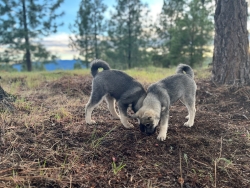 The synchronized architecture of a true matched pair expresses across every dimension of working behavior. In terrain coverage, Sig and Kaia move with spatial awareness of each other that does not require visual contact — each holding the complementary side of the patrol, adjusting to the other's position through micro-signal reading that is barely visible to a human observer. In environmental alerting, their response timing is calibrated — one initiates, the other confirms and positions, and the escalation happens in stages that the dogs themselves have defined and refined over time.
In the northern forests that shaped this breed, the matched pair was the standard operating unit of serious moose and bear work. A single dog could locate, bay, and hold. Two dogs in genuine synchrony could manage large game across terrain, hold position under pressure, and maintain coverage without allowing the animal to redirect or escape. Sig and Kaia are demonstrating this capacity in a modern working context, on real property, with real environmental pressure — and they are doing it without prompting, without direction, and without hesitation.
Their social relationship — the way they orient to each other, the communication they maintain through the working day, the way they de-escalate and settle together after a working episode — is the behavioral signature of dogs whose pack social architecture is intact and correctly formed. This is what the original Elkhound looked like in a functioning human-dog working team. This is what was lost. This is what we are bringing back.
Reidar — Mountain Intelligence and Pre-Alert Awareness in New Hampshire
Reidar is operating at the other end of the continent from the Kamia home property, in New Hampshire mountain terrain with his stewardship family Melissa and her husband. What he is showing there is not an adaptation to a new environment. It is the expression of a genetic architecture that was designed for exactly this kind of terrain — rugged, variable, demanding — and that has carried that design forward across the Ark × Revna Montana whelping lineage with remarkable consistency.
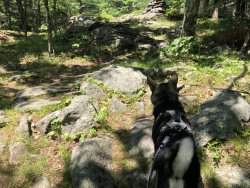 On his first serious mountain hike in New Hampshire — a short but steep 20% grade climb in hot conditions — Reidar moved through the terrain like a dog with years of mountain experience behind him. Natural climbing ability, strong rear drive, confident footing on variable surfaces, calm and steady movement in challenging conditions, and genuine enjoyment of the elevation work. This is the Ark × Revna line functioning exactly as the breeding architecture predicted.
The moment that defines Reidar's profile most clearly came on the trail when he stopped, alerted, and barked — with nothing visible, audible, or perceptible to Melissa or her husband. No stimulus. No trigger. And then, minutes later, an older couple rounded the corner ahead.
This is not reactive barking. This is not a guessing behavior. This is true Elkhound environmental intelligence — scent carried on wind, micro-sound, vibration through ground, airflow disturbance, and movement mapping long before visual contact is possible. This is the pre-alert capacity that made the original Elkhound an indispensable working partner for northern hunters operating in dense terrain. Reidar is carrying it, expressing it, and refining it in conditions that test it every time he goes into the field.
- Natural mountain climbing architecture
- Confirmed pre-alert environmental intelligence
- Strong rear drive and terrain confidence
- Handler focus without dependency
- Same behavioral framework as half-brother Arco and cousin Murdock
- Ultra-dark lineage expression
Reidar's connection to the broader program is direct and important. He is the son of Ark, grandson of Karu, and half-brother to Aurella — whose upcoming litter with Posso will carry this same behavioral architecture forward into the next Full Blood generation. What Reidar demonstrates in New Hampshire today is a preview of what that litter will be capable of.
Torin — The First Litter's Promise Enters the Breeding Program
Among the most significant markers of a restoration program's viability is what it produces when it is ready to breed forward from its own output. A program that has to go back to the same original sources for every new generation is not yet self-sustaining. A program that can evaluate what it has produced, select from that output based on the full architecture of what it is trying to recover, and plan forward with confidence — that is a program with structural integrity.
Torin represents exactly that moment for the Full Blood program at Kamia. From the first litter, ready to enter the breeding program. This is not a premature or arbitrary decision. It is the result of observing Torin's development across the full evaluation framework that the Kamia program applies to every potential breeding animal: structural soundness, working instinct expression, social pack integration, handler relationship quality, environmental stability, temperament depth, and longevity indicators across the first years of life.
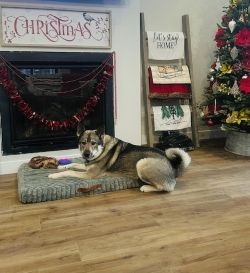 Torin's readiness to enter the breeding program represents a specific and important milestone: the Full Blood program is now producing animals from its own multigenerational output that are evaluated and confirmed as worthy of continuing the line forward. This closes a critical loop. It means the restoration architecture is not dependent on a single generational input — it is generating its own forward momentum.
What Torin brings into the next planning tier is the complete behavioral and structural profile of the first Full Blood litter — the genetic convergence that was planned across years of sourcing work, the social development that occurred within the Kamia pack structure, and the working capacity that has been observed and documented across his early years. He carries the foundation forward as a breeding animal whose own development is the evidence of the program's output quality.
Every generation that enters the breeding program from within the Full Blood lineage rather than from outside sourcing reduces the genetic dependency on the founding imports and increases the self-sustaining depth of the restored population. Torin is the beginning of that transition. More will follow as the program continues to produce and evaluate from its own multigenerational base.
What This All Means — The Restoration Is Not Theoretical Anymore
When I wrote the foundational framework for the Full Blood Elkhound restoration architecture, much of it was necessarily theoretical. The population genetics were sound. The sourcing rationale was defensible. The breeding decisions were well-considered. But the proof — the dogs themselves, demonstrating in the field what the architecture was designed to produce — had not yet fully materialized.
It has materialized now. Across multiple dogs. Across multiple lineages. Across multiple geographies. Across multiple working contexts. In bear management, in mountain terrain, in prey detection, in matched pair synchrony, in sixteen-week-old pups demonstrating bear-working instinct. The pattern is consistent, it is repeatable, and it is the direct output of the architectural decisions that the Kamia program has made over the last decade and more.
The restoration architecture is producing verifiable results across every key behavioral and structural marker
- Sola at 16 weeks — unprompted bear alerting, territorial confidence, classic ancient Elkhound behavioral architecture fully intact
- Nyra and Aurella — self-regulating coordinated bear management team, no handler direction required, full ancient team protocol functioning
- Sig and Kaia — complete matched pair synchrony in working and patrol function, the ancient Elkhound team relationship demonstrably present
- Reidar — pre-alert environmental intelligence confirmed in mountain terrain, lineage continuity with Ark, Arco, and Murdock behaviorally verified
- Torin — first litter producing a confirmed breeding candidate, the program is generating its own self-sustaining forward momentum
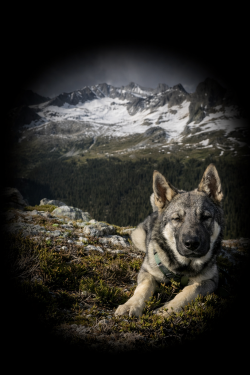 This is not anecdote. This is not selective reporting. This is the documented output of a coherent, multi-decade restoration program observing its own results across a wide enough sample, across a long enough time horizon, to say with confidence: the Full Blood Elkhound is back. Not in show-ring appearance. Not in breed club paperwork. In the field. In real terrain. In real working conditions. In the behavior that was selected for across thousands of years of northern life and then systematically removed in a hundred years of registry management.
It is back because the program that produced these dogs did not compromise with the system that destroyed it. It sourced outside the collapsed registry. It selected for function rather than appearance. It maintained pack social architecture with senior males shaping every younger generation. It planned across decades rather than litter cycles. It placed dogs in stewardship homes that gave them the terrain and conditions their instincts were built for. And it evaluated relentlessly — not just the pups, but the program itself, against the only measure that actually matters: what the dogs do.
Sola is doing it at sixteen weeks. Nyra and Aurella are doing it as a team. Sig and Kaia are doing it in matched pair synchrony. Reidar is doing it in the mountains of New Hampshire. And Torin is ready to carry it forward into the next generation. The Full Blood Elkhound is not a restoration target anymore. It is a living, working, demonstrably functional reality — and this program is the reason why.
A Full Blood Elkhound is a dog of documented northern working lineage, selected across multiple generations for functional capacity rather than cosmetic conformance, maintained within a living pack social structure, and capable of demonstrating the complete behavioral architecture — instinctive awareness, environmental intelligence, handler relationship, terrain capacity, and team functioning — that characterized the original landrace dogs of Scandinavia. It is not a registered breed. It is a restored working population.